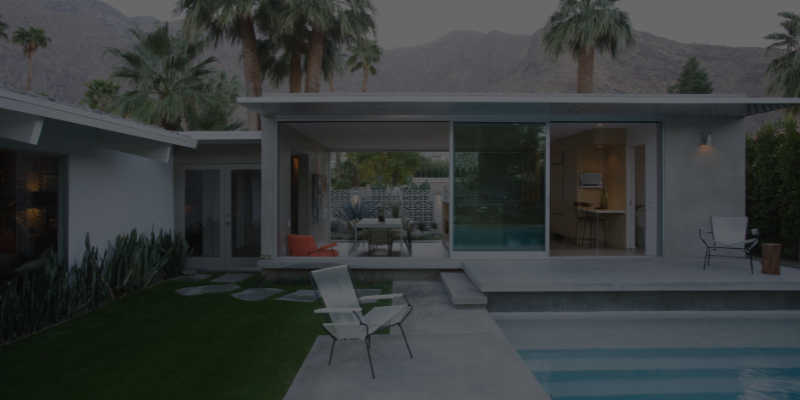
Most mid-century modern homes share distinctive design elements, such as open floor plans, natural materials, minimalistic decorative objects, and an emphasis on functionality. Over time, a different breed of mid-mod homes began to evolve, featuring distinctive new characteristics in lighting, color, materials, and décor. Known as the “Palm Springs look”, the popular design trend started in desert and coastal regions and now can be found across the country – including Kansas City!
Palm Springs has become a mecca for many of the world’s most iconic examples of regionally distinct mid-century modern design. Characterized by its desert-inspired look and feel, Palm Springs and Mid-Mod became closely associated in the years following WWII, when Hollywood elites commissioned architects to design strikingly modern vacation homes. Almost sculptural in design, these futuristic dwellings popped up throughout Palm Springs, California, between the late 1940s and the early 1960s. The space-meets-desert aesthetic quickly became known as the “Palm Springs look”. And while the unique design style is most associated with sand and sun, distinct elements of the Palm Springs “look” were adopted in both home design and home furnishing design by aficionados across the country.

Former entertainer Bob Hope’s space-age Palm Springs home.
What is Palm Springs Mid-Century Modern style?
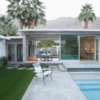
The Palm Springs take on mid-century modern design is defined by clean architectural lines, open spaces, large windows, indoor-outdoor flow, bright white interiors, and vibrant pops of color.
Traditional mid-century modern design is characterized by a highly aesthetic blend of streamlined architecture, organic shapes, natural materials, and open-concept layouts. Minimalism and functionality drive every design decision.
The difference when it comes to mid-century modern design with a Palm Springs twist is:
- Heavy emphasis on natural sunlight
- Strong connection between interior and exterior spaces
- White as a dominant design color
- Vibrant accent colors
- Desert-inspired landscaping
- Playful, atomic-inspired 1950s and 1960s décor
What are key elements of Palm Springs Mid-Century Modern design?
Key elements of mid-century design in Palm Springs embrace these homes’ desert setting through architecture, color, material, and décor.
First and foremost, the abundant sunshine and year-round warm weather all but dictate large expanses of glass window walls. They not only let in natural light, but they also allow the homes to embrace the surrounding landscape – which becomes as integral to the design as the structure and furniture.
Walls are typically painted a bright, stark white to reflect the light coming into the space and create a modern, clean aesthetic. To contrast the white walls, expressive color is incorporated through the addition of pillows, throws, art, and other furniture pieces. The same base white with color for contrast also extends to exterior spaces. Backyards often feature a swimming pool, surrounded by white hardscapes and white patio furniture, all accented by bright, colorful cushions, umbrellas, and surrounding planters. Front doors are often painted in bright, vibrant colors – from bold reds and yellows to soothing blues and greens.
Another common element in exterior spaces is breeze block walls. These painted cinder blocks are designed and stacked to create mosaic-like patterns that offer privacy while also allowing air to easily flow through. Plus, they are highly durable and resilient against extreme weather conditions, a real consideration in the desert.
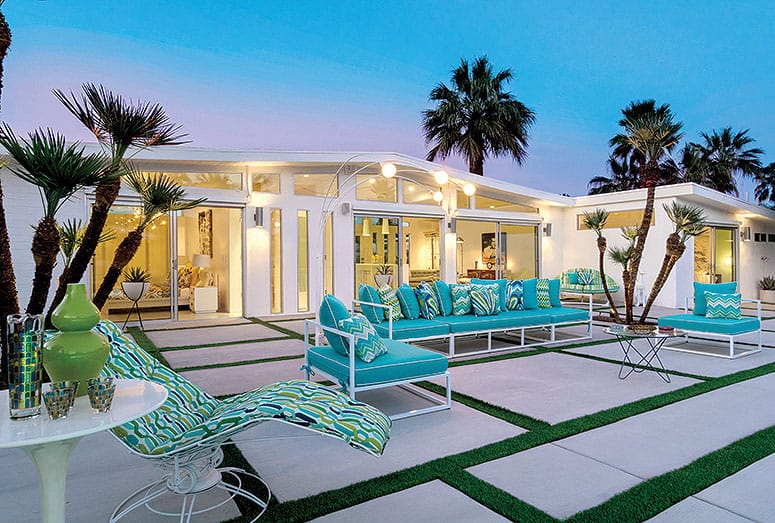
The choice of white is for more than aesthetics. It also helps keep the home cooler.
What colors are used in Palm Springs Mid-Century Modern homes?
Palm Springs interiors generally feature a bright white base foundation with bold accents of turquoise, pink, yellow, lime green, and sky blue.
White serves as the neutral base for both its aesthetic appeal and its ability to reflect the intense desert sunshine, which helps keep indoor spaces cooler. To prevent so much white from becoming tedious or having a sterile effect, strategically placed bright colors create a bold and dramatic contrast.
Accent colors come through in:
- Small and large works of art
- Pillows and throw blankets
- Large, textured rugs
- Vases and planters
- Furniture pieces like statement chairs and curving sofas
- Doors and accent walls

A vibrantly painted front door is an easy way to add a pop of color.
What are the best materials for getting the Palm Springs look?
To truly achieve the Palm Springs look, a combination of several different material types is needed.
Combining different building materials can help achieve the Palm Springs look. Natural elements such as wood add warmth and balance to the sleek, modern lines and structure, while stone incorporates naturally earthy textures. Metal is commonly used for furniture, and wide, floor-to-ceiling picture windows blur the line between interior and exterior spaces. Concrete often contributes to the clean, architectural style of the home – emphasizing strength and functionality.
Don’t forget to add plenty of natural greenery as well, with bonus points if the added plants are of a desert variety – succulents, palm trees, and cacti.

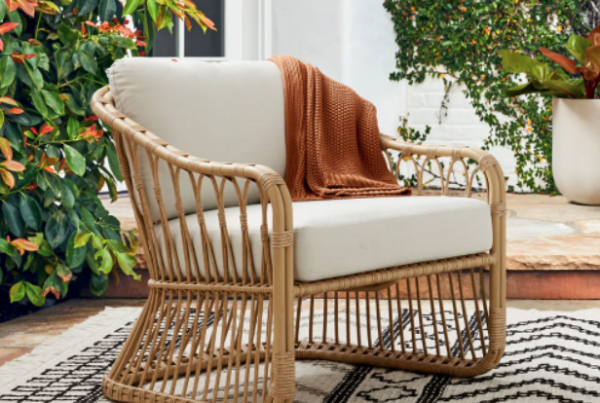
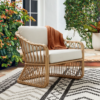
Natural materials and bright accent colors liven up the all-white space.
Modernism Week in Palm Springs
If you are interested in exploring Palm Springs’ iconic midcentury-modern design up close, Modernism Week is an excellent time to visit. Every year, Palm Springs hosts a whole range of events spanning home and architecture tours to films, lectures, parties, and more for over a week in February – all celebrating the city’s unique mid-mod personality.
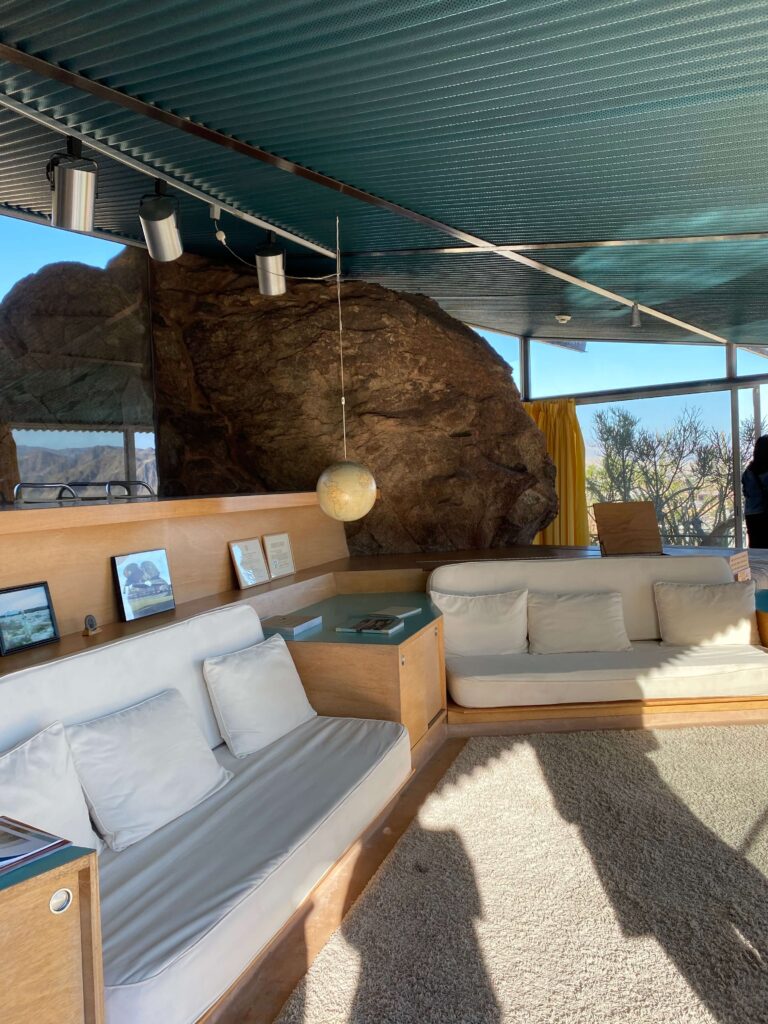
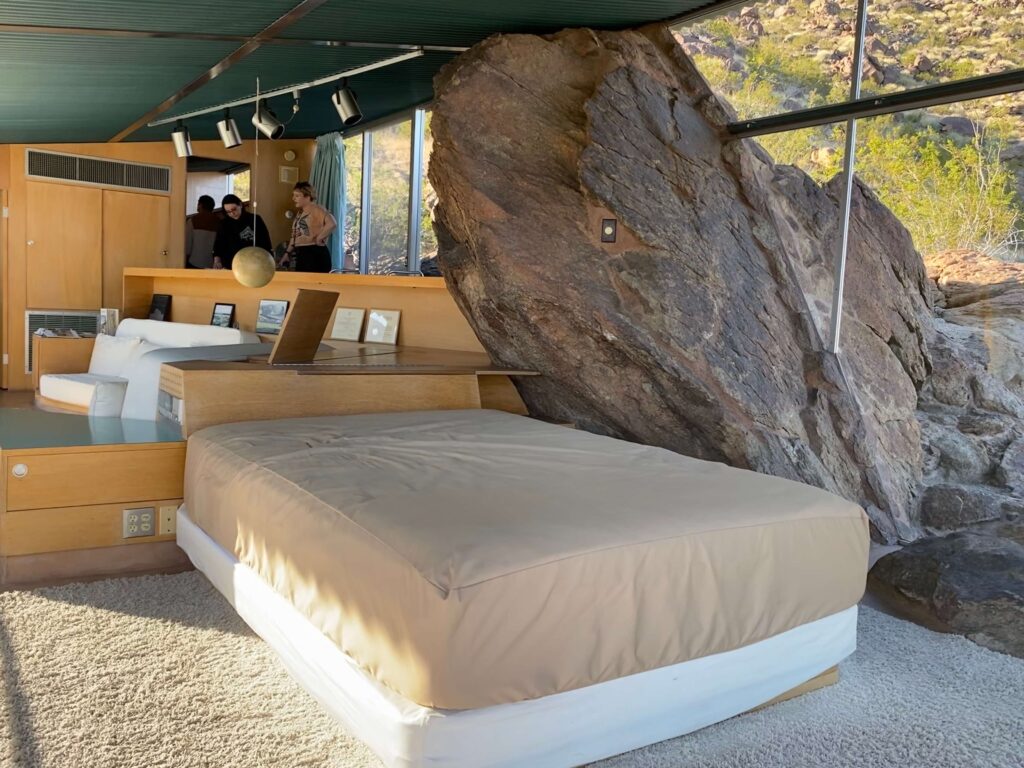
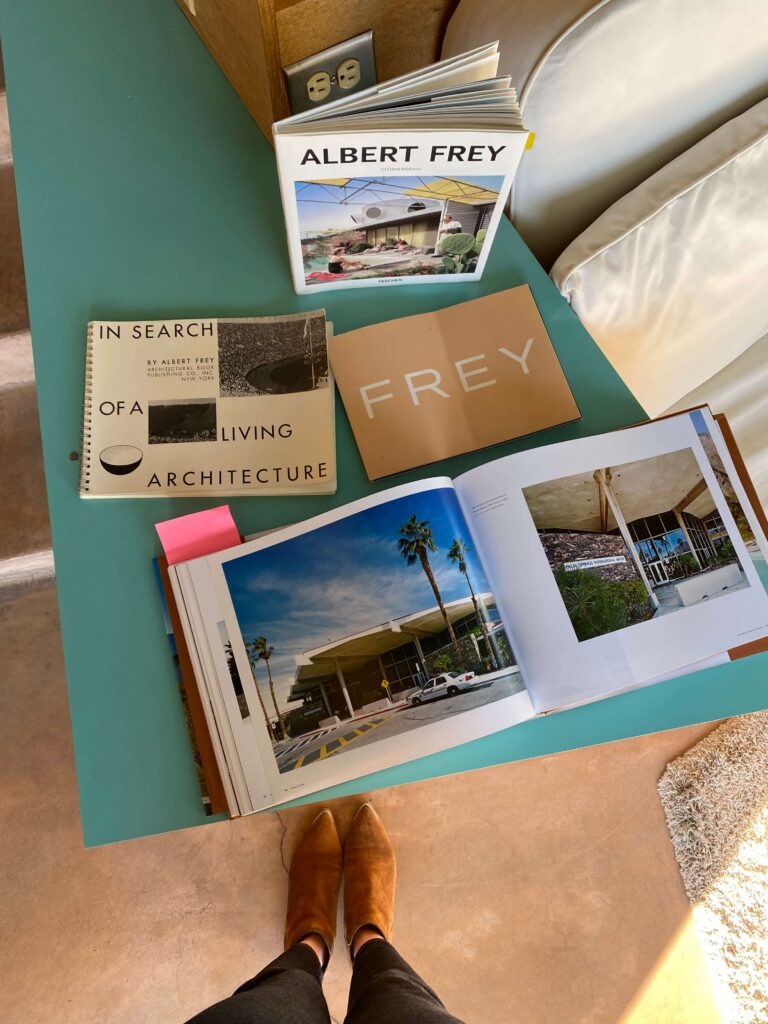
During Ashley Kendrick’s last trip to Palm Springs Modernism Week, she toured several homes, including the famous Frey House II. This mid-century modern residence was completed in 1967 and was the personal home of architect Albert Frey. It ranks among the world’s most influential mid-century modern homes, with a striking steel-and-glass structure carefully fitted into the mountainside. The interior of the home most notably features a massive boulder separating the living and sleeping areas.